Saturday, September 29, 2012
Women and Gays In IFA And Orisha Worship (A Revolution In Traditional African Religion And Diaspora)

327 pages
Ana Maria was a was what I call a floater she was baptized Catholic and born in Lucumi, and eventually crowned. Being a Santera just did not seem enough for her and she began to learn IFA. She was relentless in her studies, but had no interest in marrying a Babalawo because she was a lesbian. During her studies she cast aside Catholicism and took it out of her personal practices and worship. This was an improvement, but she still felt she was destined for higher service. Next she became a Palera, but never felt that IFA (her passion) and Palo walked hand in hand, as they seemed to in Orisha worship. She tried Voodoo, Hoodoo, and other traditions, always coming back to IFA, despite what she felt was a suppression of equality for women and gays.

After a time, she began reading how women were treated as equals in Yoruband, so she joined an ile in the state of Ogun and learned that in Yorubaland there were still things a man could do, that a woman could not in IFA. She asked many elders about this, who usually answered evasively, or asked her to consider why Olodumare made male and female. The wise Awo would entreaty that women have an equally important role in the religion as in day to day life, but there is a difference, just as a male can not birth a child, neither can a woman initiate the process without a man. She understood, but still she was unhappy and felt women were slighted from, not just IFA, but counsels, and the hierarchy. Ana Maria began to see that it was not just Lucumi where women were not equal, the more times she heard "equal, but different" the angrier and more frustrated she became. She visited Brazil where woman have a rich history because the Portuguese had murdered all the male Babalawos centuries ago. The problem in Brazil was that she found Portuguese to be difficult to learn. She saw that while Orisha worship was perhaps even skewed to women in Brazil, IFA seemed to be newer there and more murky.

327 paginas

Ana Maria met Jim in a forum on Facebook, Jim was gay and like Ana was a floater, they had traveled the same road for different reasons. He was well spoken, knowledgeable and an independent student of IFA. Jim like Ana was frustrated and unwilling to accept the tenants of IFA that preclude gay men from the priesthood. For my part, I met both Ana Maria on a Facebook, but separately, both had written me a nice note congratulating me on my book, Nature's Ancient Religion. Ana Maria had read my book in Spanish (IFA y los Orishas: La Religion Antigua de la Naturaleza), and Jim had read my book in English. Over time I began to see both Ana and Jim pop up on many groups on Facebook and forums elsewhere. In the course of things we three became Internet friends. Not being gay or a woman caused me to reflect on their plight, their gripes, and their feelings. You see it was not just Ana and Jim, it was a large group of women and gay men who were equally frustrated.

Like many Awo, I understood their frustration, yet I was and am in no position to change the way things are, and in fact I am not sure I would , if I could. In fact this irked and irks me to see the same exact discussions over and over, and in every single group I belong to. You see, while I am sympathetic to their plight, I am happy with my beloved Lucumi, there is no chance of changing the tradition as I see it. However, I put on my thinking cap, because like a baby that is crying, crying and crying, the baby will not stop unless he or she is attended to. The baby may need changing, food, or simply attention.

We all learn from history, be it oral, written or experienced. It we look at our religion(s), we find they are fragmented with traditions, some of these fragmentation's in diaspora came about because of necessity rather than choice, yet other purely came from choice. Even in noble Yorubaland there are fragmentation's, Oyo does not do some things as Osogbo, just as Osogbo does not do all things as in Ife. These differences can be either in mechanics or philosophy (or both), the same is true when comparing other West African traditions to Yorubaland, There is often a misconception that all of Yorubaland does things the same, when the reality is quite different. There is a beauty to our structure, that not enough followers appreciate. Some of those seek misguidedly to combine all the traditions and make one super religion. This of course will never happen, as centuries of tradition and culture are not given up, ever. Many of these ONE Super religion types also tend to insinuate and in some cases outright claim that their tradition is superior in power, history, or culture to others. There are other motives like money, but let's avoid looking at these and focus just on those who seek to consolidate. We'll often find the consolidators the worst culprits in disrespecting other branches or traditions of our religion, why? Because they have a motive or motives. The enlightened, see the futility of promoting consolidation, and tend to be more receptive in respecting those traditions that are not their own, but related. If we look at my beloved Lucumi, we find that like in Yorubaland (or anywhere else) mechanics and philosophy vary somewhat ile to ile, and more so from rama to rama. Therefore, the reality is anywhere on the planet we look, we see differences.

These differences are to be respected, just as our many similarities are to be celebrated. Disrespecting another tradition, or ile is much like a divorced spouse ranting and raving about their former mate. It is unsightly, and we ask, " Humm, I wonder why she or he married them in the first place". It also can and often does damage the children born from this union.The wise former spouse, sings the praises of their former mate, and learns the lesson to not drink the same dirty water. If we look at other religion, (ANY other religion), we see differences that through history have cause fragmentation. Look at the Jews who spawned, both Christianity and Islam. Islam has Sunni and Shi'a, and other branches that fall from that tree. Christianity we can start with East vs Roman Catholic, continue to Martin Luther branching off, and all the branches of Protestantism. We can do this exercise in Hinduism, Buddhism, Taoism, etc, etc. Now coming full circle, we notice that while there are many branches, the trees they belong to are clearly defined, and not in dispute. The same is true with all the diaspora based traditions, they came from West Africa and are part of those various trees in that grove,

In conclusion, I must ask when will Ana and Jim and all the other gay and women who want to have a larger role in IFA begin to learn from history? Why have they not started their own tradition(s)? My ogbe sa brain tells me that at some point they will stop exhausting themselves swimming up stream in Oshun's river and just create their own tradition. When this happens, history will tell us there is much resistance and perhaps centuries before the rest of the groves accept them as family, yet like all religions this is the price of being a separatist.
About the author:
www.amazon.com/Charles-
Facebook ~ add me
www.facebook.com/Orunmila
About the author:
www.amazon.com/Charles-
Facebook ~ add me
www.facebook.com/Orunmila
Labels: Afro Cuban, Awo, Babalawo, Charles Spencer King, IFA, Irunmole, Lucumi. Lukumi, Nature's Ancient Rligion, Orisa, Orisha, Santeria

Thursday, September 27, 2012
What Are The Least Violent Religions To Mankind ?
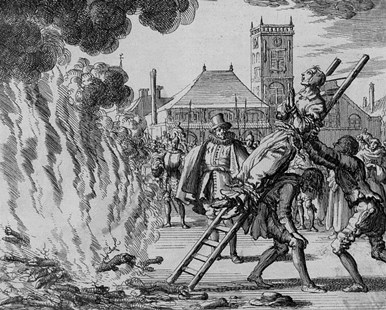
There are a number of ways to qualify this, but how we are going to approach this today is in groups. We are going to look at these historically, verses today, or a certain time frame. For example, Catholicism would certainly be more violent during The Spanish Inquisition, than it is now. Therefore, lets start with the Abrahamic religions and their major components. These are the religions who believe they descend from Abraham, and each believes in one God or is monotheistic, We will rank these from oldest to newest, beginning with Judaism. Now within Judaism there are many branches such as Samaritan , but perhaps unfairly and due to space we will simply use Judaism collectively. Christianity follows with the birth of Christ and led to The Catholic faith that began splintering into branches in 381AD, and while there are others, the three main branches are: Rome (includes the West and 22 Eastern Catholic churches);Eastern Christianity are Christian traditions and churches that developed in the Balkans, Eastern Europe, Asia Minor, the Middle East, Horn of Africa, India and parts of the Far East ; Islam began roughly in 610 - 620AD, and its two major branches of Sunni and Sh'iah, ( there are others, and Sufism would get my nod, of the least violent of these) Protestantism, and its many fragments arrived next in the 16th century with Martin Luther and The Reformation (for my Republican friends, I should add that this is where The Later Day Saints Church and its principle Mormon branch fits); The Bahá'í Faith was started in Persia around 1844.
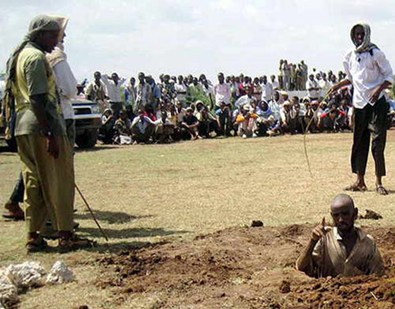
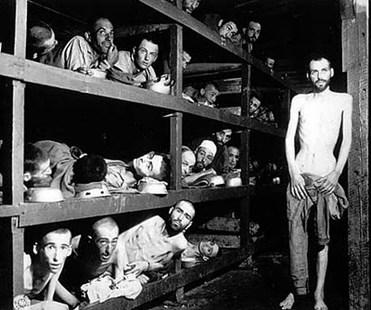
It is not too difficult to tab the less violent branches in Abrahamic religions. Generally speaking the Abrahamic religions are by far historically the most violent of all religions. Yet even in the midst of all this violent history (that we don't need to revisit), there are some notable exceptions. It is not just its shorter history that awards the prize to The Bahá'í Faith, but for its tenets and beliefs.Thus, if you are looking for a peaceful branch of an Abrahamic religion other than, Islam, Christianity or Judaism, I suggest you Google The Bahá'í Faith. Now before my Christian, Muslim and Jewish friends cry foul, permit me to make two statements: 1) Any religion does good, some more than others and most are more self serving in the process. While we can argue about religious educations and their value (or lack of in colonizing), we readily salute them for the health services they provide, as well as agricultural contributions. 2) It is important historically and currently to understand how religion and government use and excuse themselves. Certainly Hitler expunging the Jews in his empire was a religious crime of serious magnitude, yet he did it under the auspicious of Germany and The Third Reich. The same is true of The Iran - Iraq war that pitted Sunni against Shi'ah, or the atrocities committed by Roman Catholics during The Spanish Inquisition. The list of examples is long, and the point is that religion and government make strange, but convenient bedfellows. Ask almost any Muslim and they will point to the USA and the Christian policies that "In God We Trust" that tout freedom intrusively. Remember The Crusades? There is a significant amount of history between these two religions, and then there is Israel and Palestine ! Christianity and Islam are not only under the Abrahamic banner, they are the two largest religions in the world today.
Now we come looking to the group of religions we call India founded. I'm not wild about this name, as noble India has had many borders and even using the treasured "subcontinent" can be misleading. However, we will go with it and start with the mother Hinduism, followed by Jainism, the various forms of Buddhism, and finally Sikhism. Like the Abrahamic branch there are many branches within these religions, but as before we'll use these major designations. In most, but not all cases, these are considered dharmic religions. Based on archaeological proof, Hinduism is considered by many to be the world's oldest religion, Judaism is a challenger as well as the many indigenous religions in other cradles of civilization, yet the physical evidence (at this juncture) favors Hinduism's claim. If we ask Hindu's many would say theirs is indeed a peaceful religion, as most of the violence was Islam attacking them. However, a Muslim would vehemently disagree, as would perhaps a Sikh. Fortunately though we have two candidates here that stand head and shoulders above as far as non violence and peaceful existence with mankind, these are Jainism and Buddhism. Jainism is perhaps less of a controversial choice, than Buddhism. The reason is that there has been violence, and continues to be violence in Buddhism. Here, the observer can say it is defensive, yet violence is violence and we are not here to place blame, but simply identify. You can find out more about Jainism through your favorite search engine.

The Persia religions include Zoroastrianism, Kurdish tribal religions and Mandaeism. Again there are others but these are the major domo's. None of these really stand out as being particularly violent or outstandingly peaceful. Other religions of note that I would not classify in our elite group of tolerant, non violent include Shinto, Chinese Folk, Korean, Shinshūkyō, Scientology, Cao Đài, and Taoism. African Traditional Religions are a mixed bag, though the Yoruba branch is my religion, as much as I'd like to include it to our elite group, I can't. Not because of the animal sacrifices, (because we are talking about mankind), but because of its warrior roots and infighting with other tribes historically. The same is true of ancient mezzo American religions like the Aztecs, Mayans etc. Even the Native Americans don't get the nod, not because of the persecution they suffered at the hands of the white man, but because of their infighting among other tribes. The same is true of most indigenous cultures, though there are exceptions.
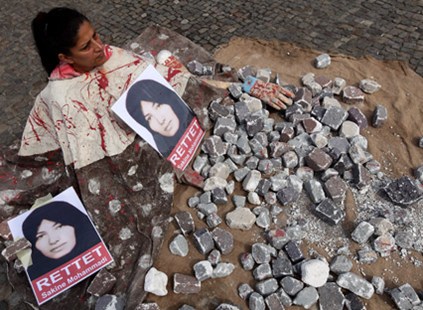
Shall we award a grand prize? I think not, but each of the category winners are well worth reading up on, and have earned my respect. Having said that, even in the most violent religions there are those who find the peaceful and tolerant path of peaceful coexistence with other religions and ways of life. I find that the more focused religions are on respecting Nature, the more peaceful they generally are. After all, humanity is a part of Nature, though many religions and followers seem to forget it. We don't want to get into a discussion on the value of humanity to Nature, though do we? To some, including me, not killing fleas or bedbugs seems extreme, however littering or polluting a river does not. Neither does civilization encroaching on a rain forest, or the erosion of the ozone layer by greenhouse gases. Seriously, if we look at the religions who celebrate Nature through ceremony and beliefs, we will find the peaceful ones.

Labels: Abrahamic, Bahá'í Faith, Buddhism, Charles Spencer King, Hinduism, IFA, Jainism, Natural religion, Sufism